
INTI RAYMI CELEBRATION CUSCO, PERU JUNE 24, 2019
A Personal and Historical Storytelling
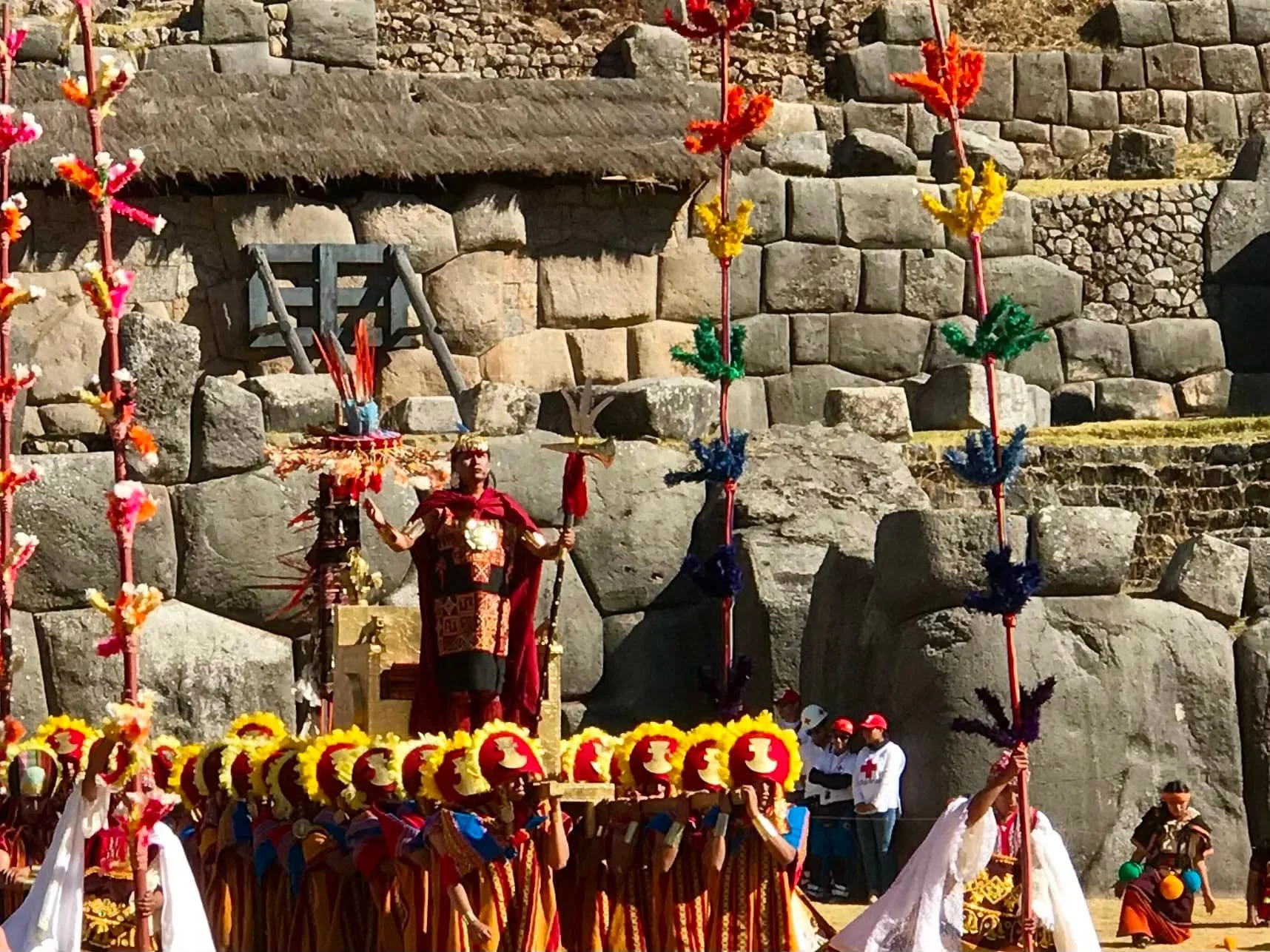
The Sapa Inca arrives.
The yearly Inti Raymi Celebration in Cusco is wonderfully spectacular and culturally informative. This was the day, June 24, 2019, that I was finally able to comprehend the ceremonial significance of the immense grassy plaza at Sacsayhuaman, the archeological site that sits above Cusco City. Although I had walked that ceremonial plaza dozens of times in years past, I didn’t realize the purpose it now holds for the Andean culture.
There was an excitement in the air that was palpable, like none I had the privilege to witness before! Over 100,000+ people attended this ceremony– I didn’t see an empty area in the entirety of Sacsayhuaman!
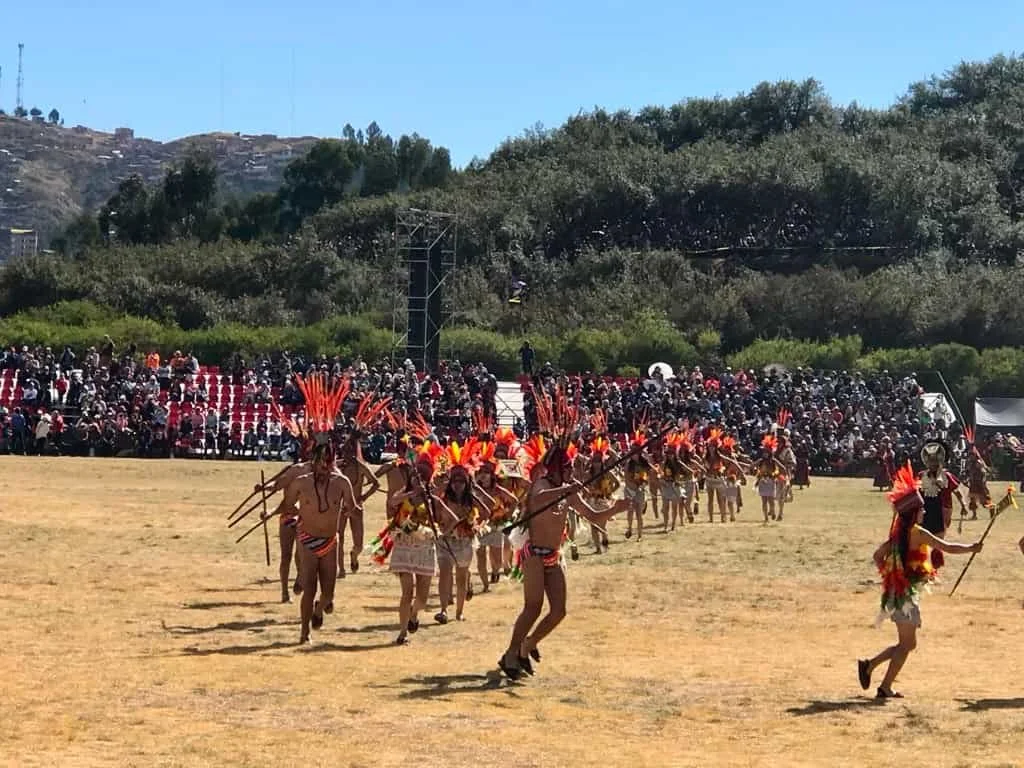
It was a warm and sunny day for that time of year up in the highlands of Cusco, at an elevation of over 12,000 feet amongst the surrounding apus. Inti was welcoming its Children of the Sun to be sure! Joy, anticipation, celebration, an immense sense of honoring in this ancestral tradition being re-membered on a cellular level in each and every person I encountered… as well as in myself.
The city and the participants all dressed in the splendor of royal costumes of the ancient days. It was breathtaking, to say the least. I soon felt the ceremony envelope me, as I found myself sitting very near the actual ceremony and close to the actors, a mere 15 feet away. Its intensity brought me to tears many times.
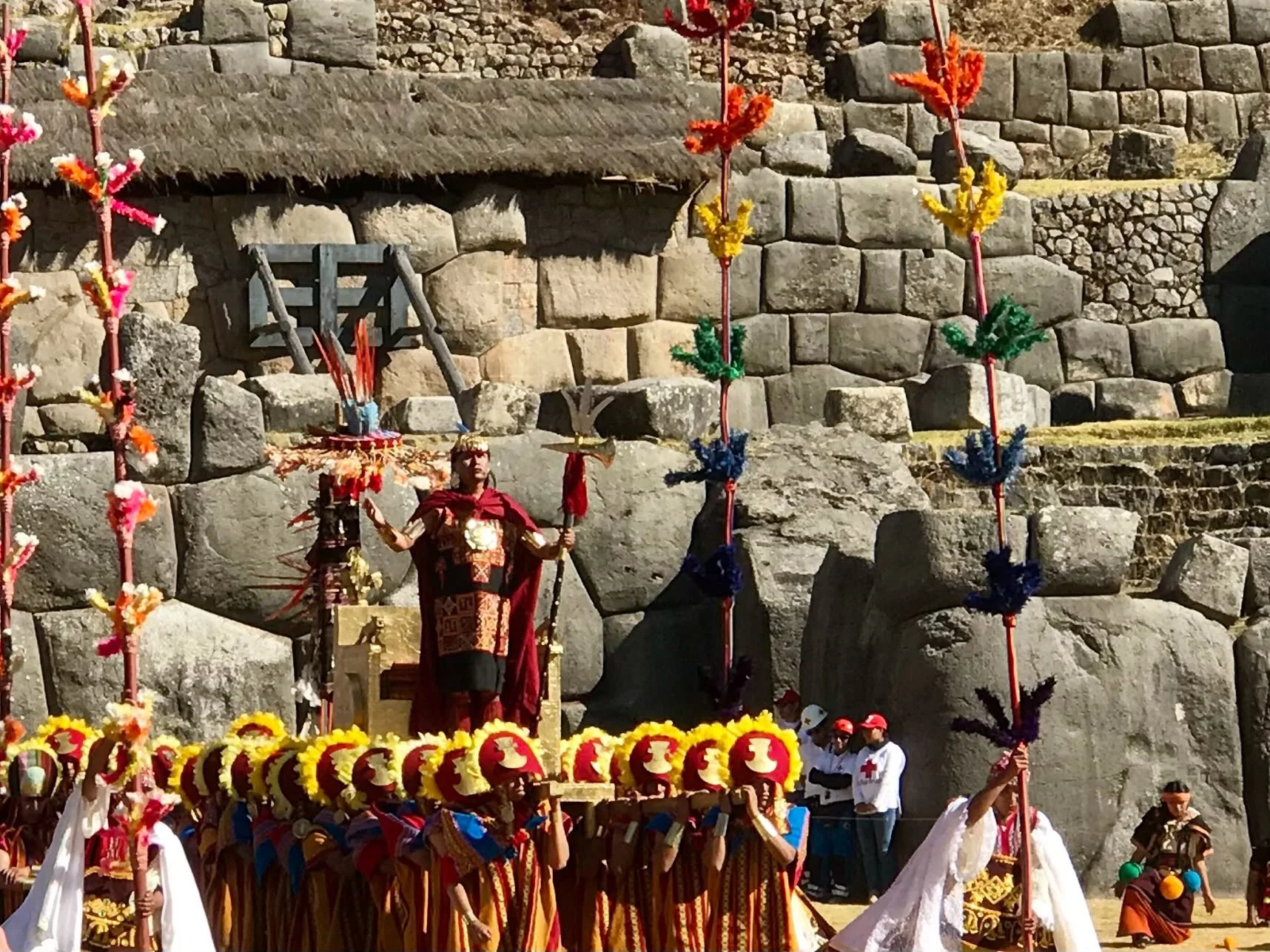
The arrival of the Sapa Inca.
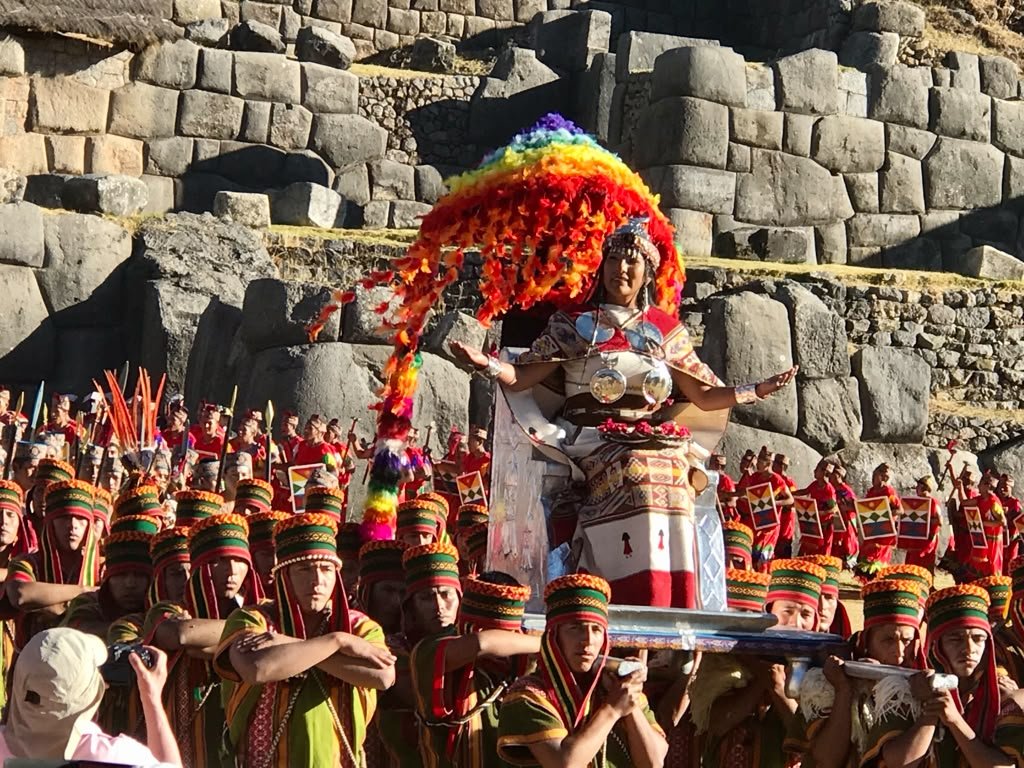
The arrival of the Inca Queen.
The sounds of the Pitutu (ceremonial marine conch shell) resonated on a deep level of my soul. It called in and welcomed the Tiwantinsuyu, the assembly of representatives from each of the 4 regions– Antisuyu, Qollasuyu, Chinchaysuyu, Kuntisuyu– for the Inca Ruler and his Queen. There were gifts brought from their territories to honor the return of INTI and the Inca Royalty, for ensuring their ayni, abundant crops, and each ayllus’ prosperity, offered to the Sun God for the coming year.
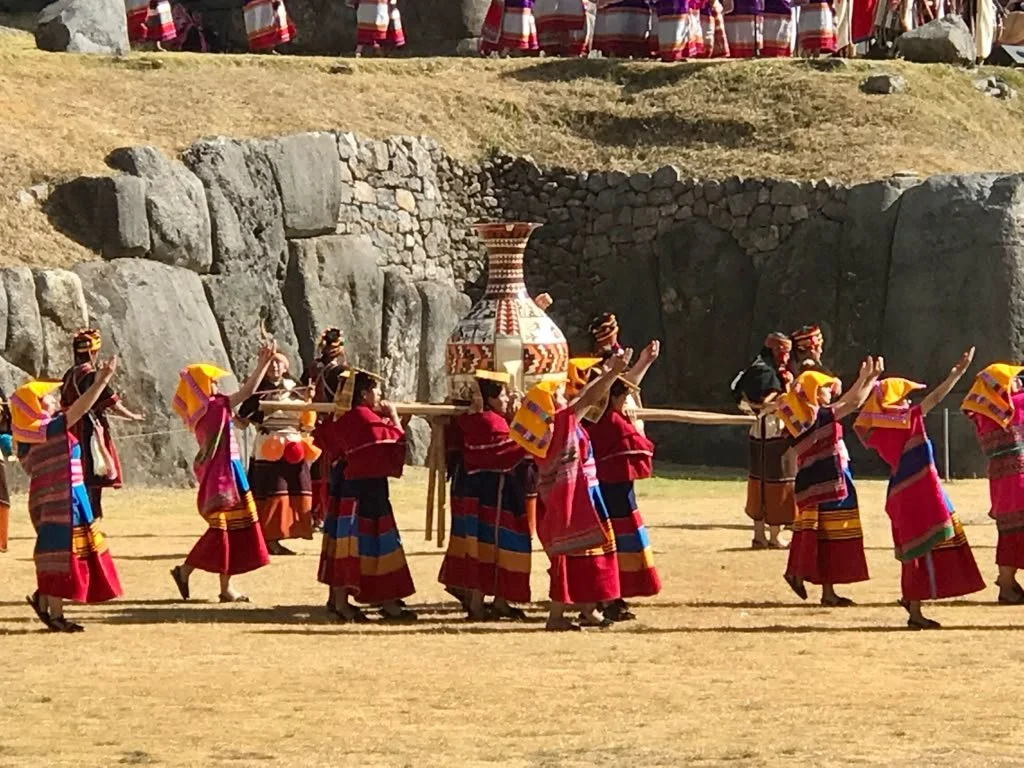
The chants, music and drumming as they assembled around the ceremonial platform for messages received and given from the Inca Ruler were captivating. And I heard hundreds of spectators gasp and sit in mesmerized silence as the high ceremonial sanctity wove our presence into the ceremonial container of the plaza.
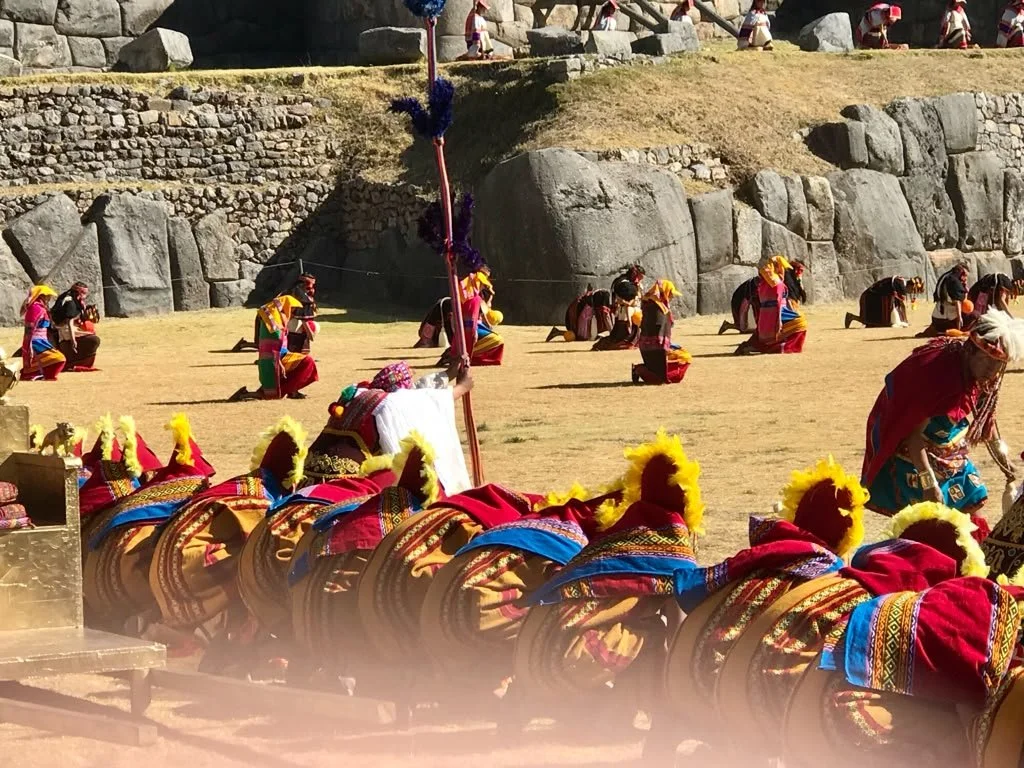
Each region-suyu was thus called and ushered into the ceremonial gathering with the Pitutu: each with their specific costumes; each with their specific ritual cadence or dance, song, and musical instruments; each to their specific placement within the ceremonial plaza. Each brought their specific haywa-ofrenda–offering for this highest of yearly ceremonial events, all awaiting the messages from the Inca Emperor for the days ahead.
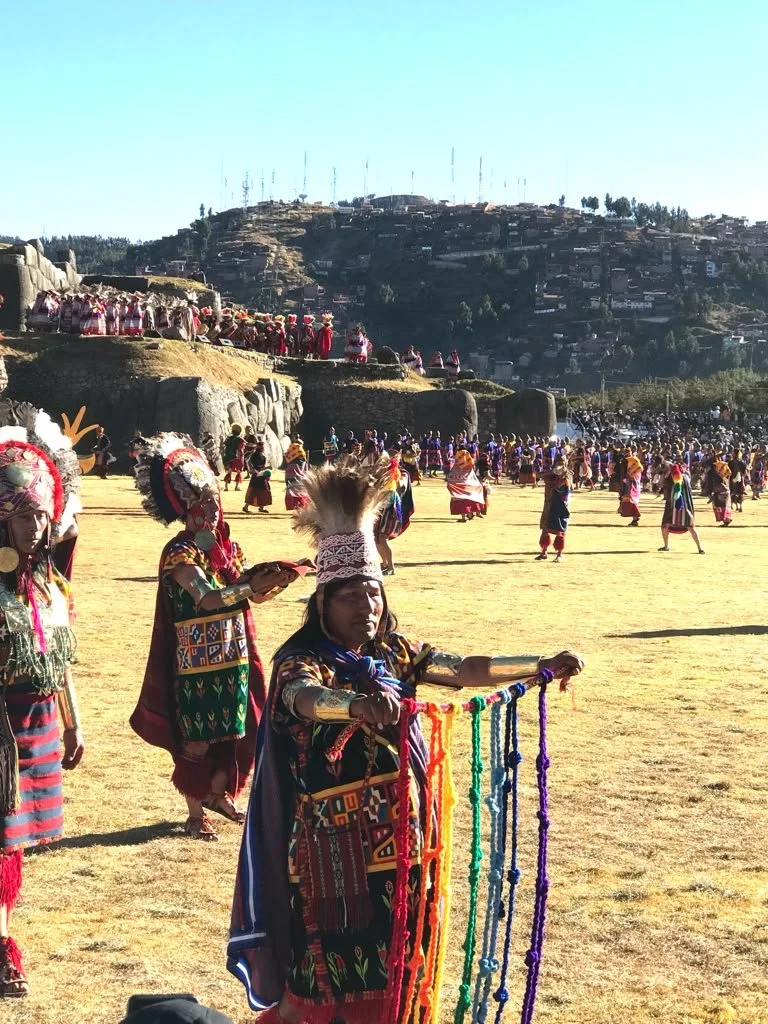
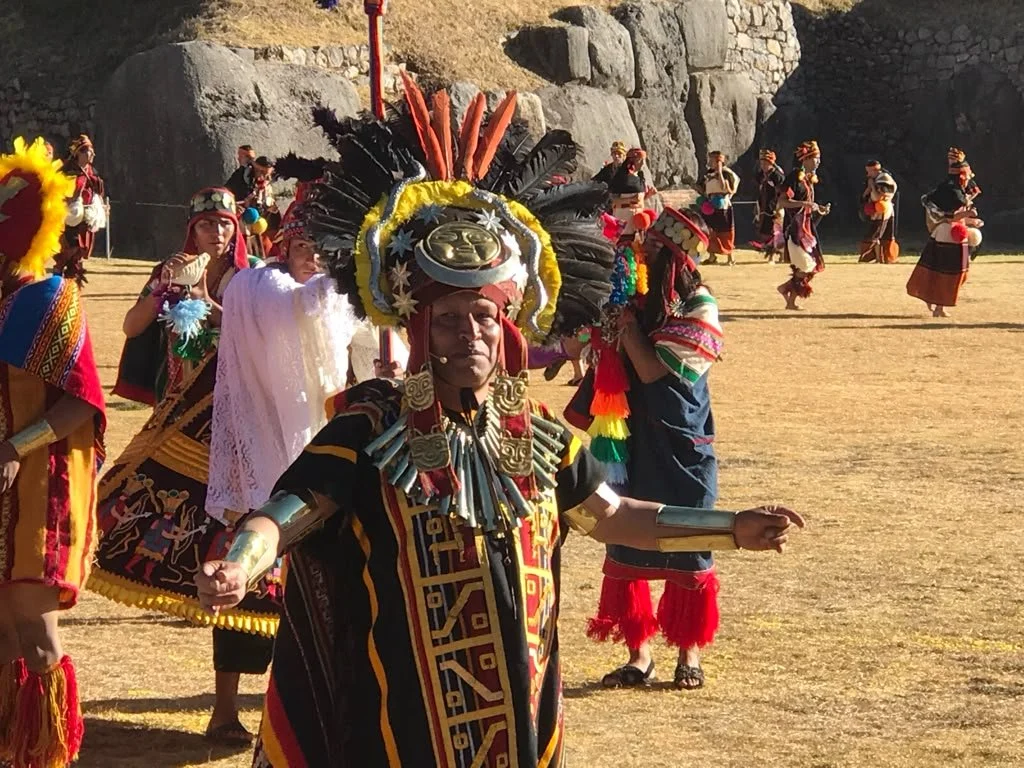
I was able to witness rich cultural costumes and traditions: the simulated sacrifice of the highest ofrenda, the pure Black Llama of the Inca (believed to be a direct connection to the dark cloud constellations); the offerings to the Sacred Fire (Nina Rawray), symbolizing rebirth, cosmic order, and renewal of one’s Solar energy; and the Inca Kingdom’s purification atop the ceremonial platform that day, as the Inca Emperor spoke over his kingdom. My heart still beats with gratitude and awe as I re-member that day!
A History of Inti Raymi
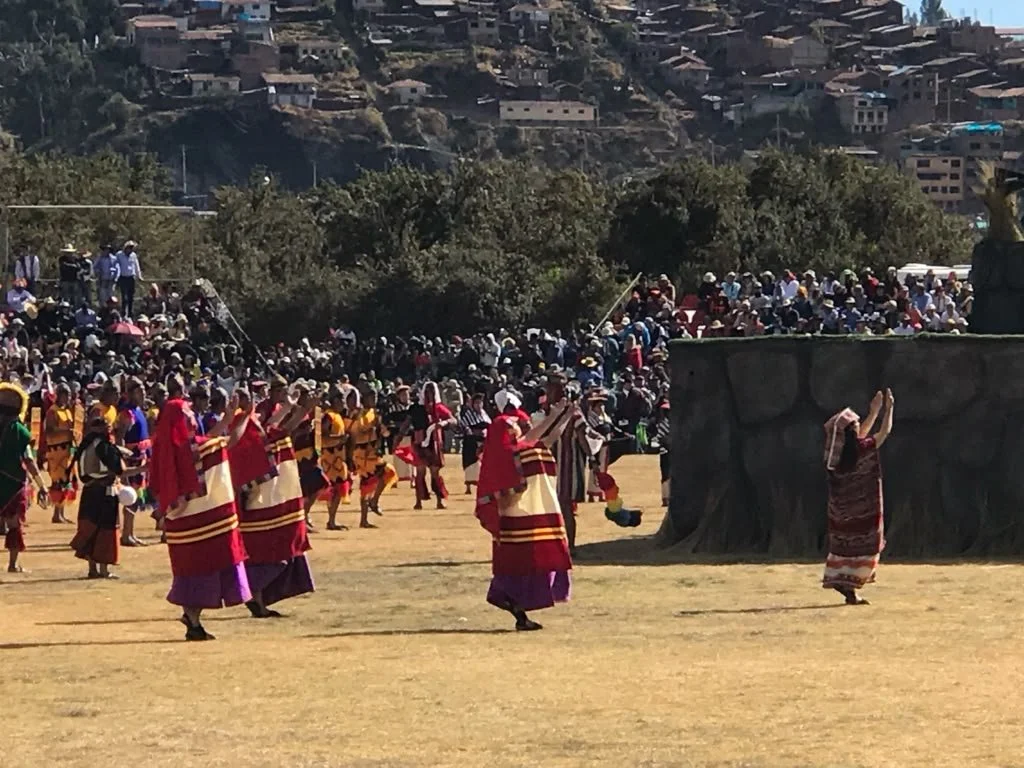
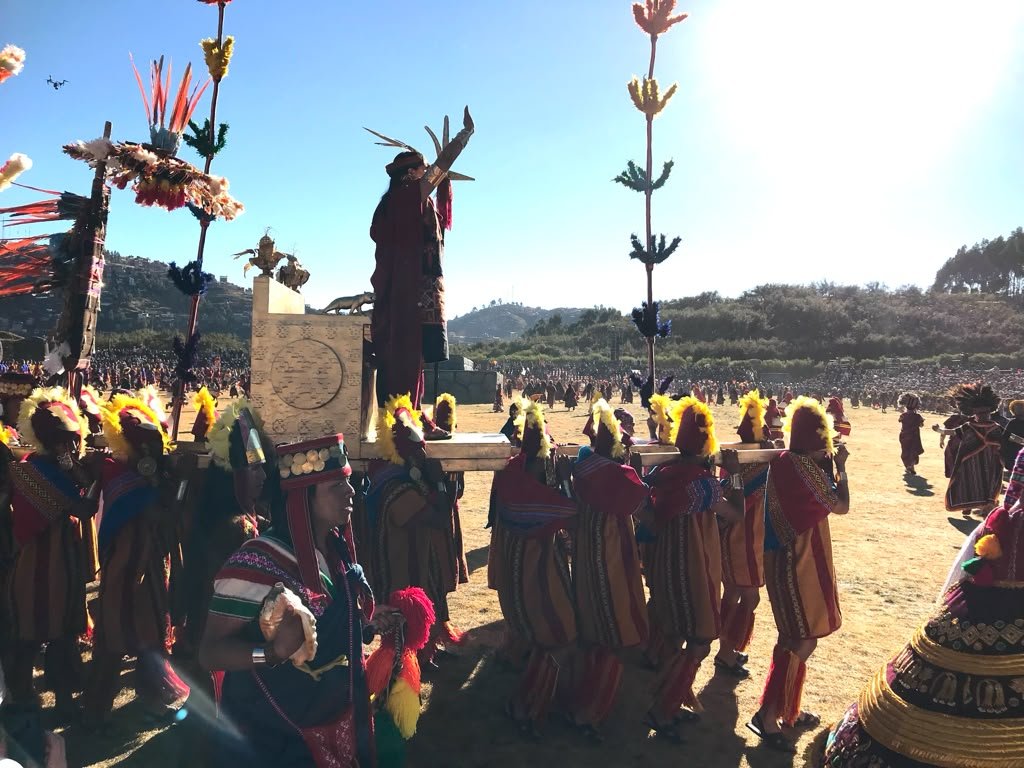
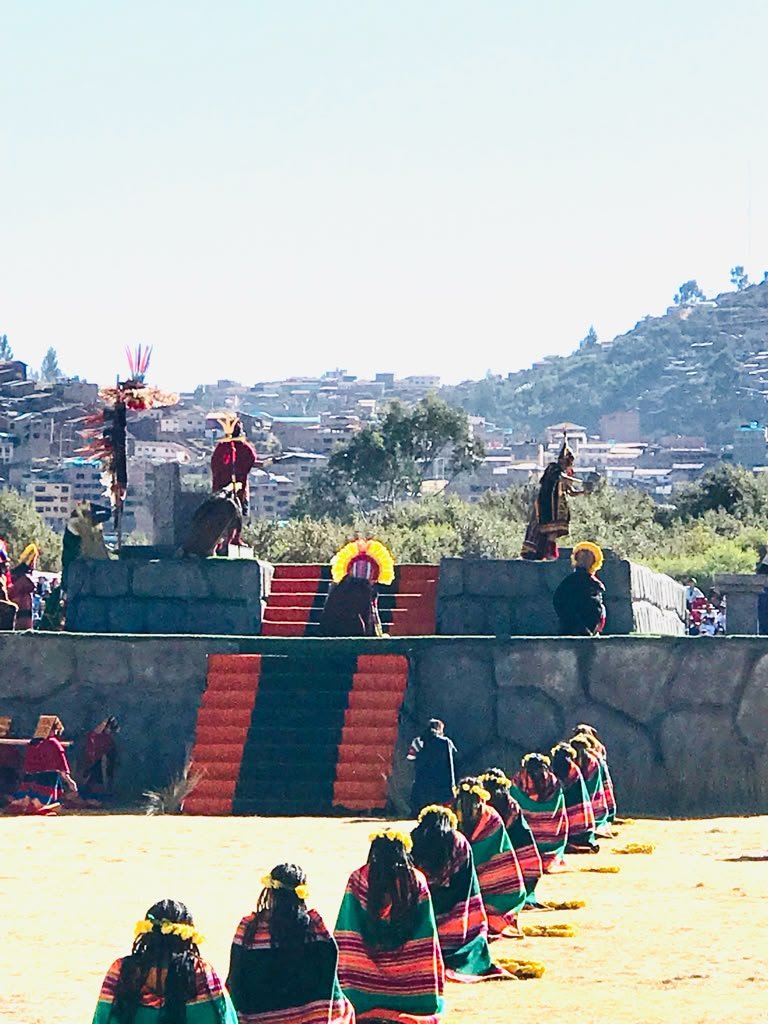
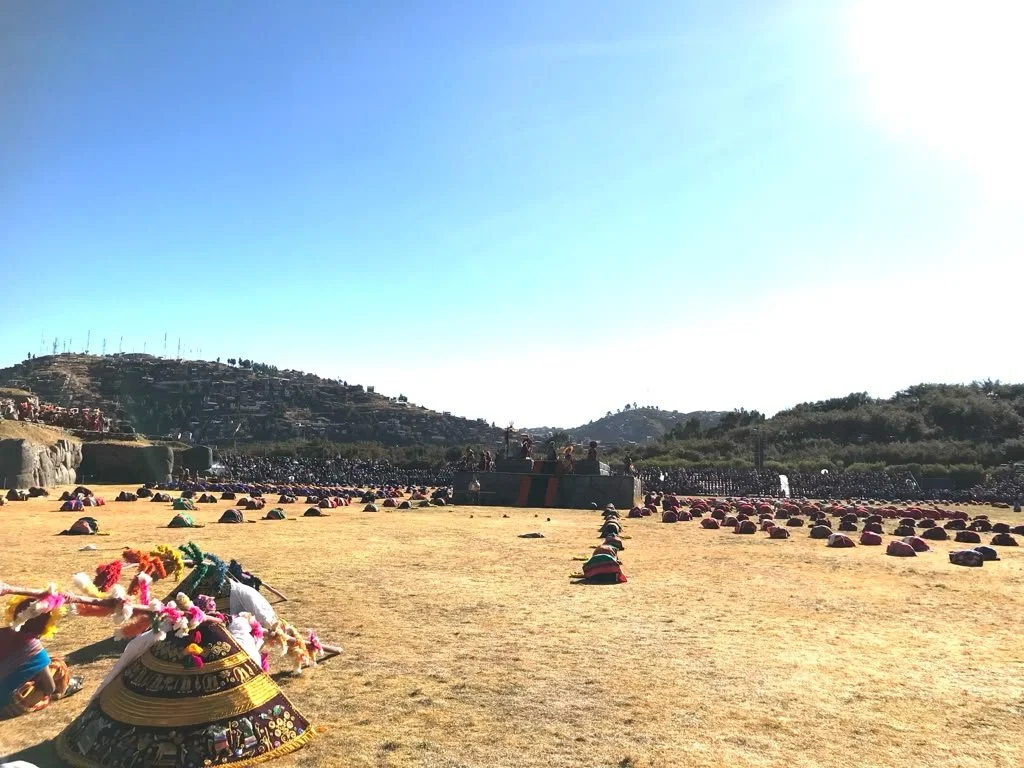
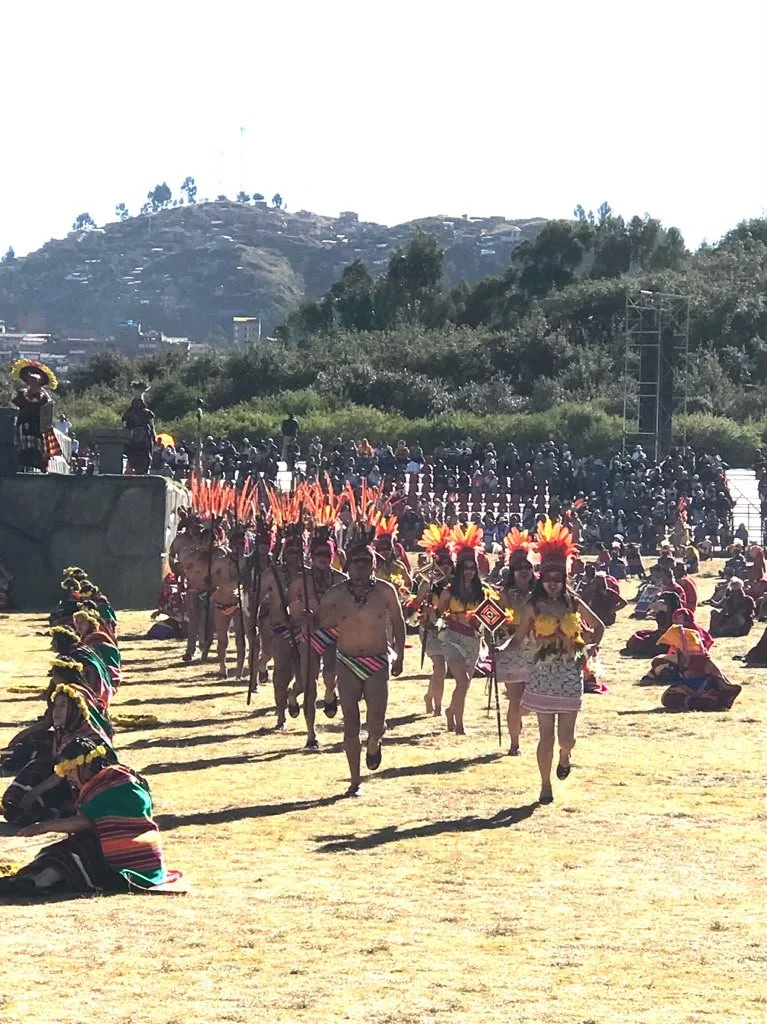
What is the Inti Raymi? It is the return of the Winter’s Solstice Sun celebration in Cusco, the historical capital of the Incan society, the Navel of the Incan Empire! (Remember, the solstices are reversed in the southern hemisphere from what we experience in the North.) In the native Quechua language, Inti is Sun, Raymi is Massive Celebration; it also represents the Inca New Year.
The chronicles of the time say that the Incan Emperor Pachacutec (the 9th Sapa Inca) established the first celebration in 1430 A.D. (His statue is honored to this day in the famous center of the Plaza de Armas in Cusco City.) The festival continued until the Spanish takeover in 1535, when it became forbidden.
But for nearly 400 years, it was secretly held and woven into the Catholic feast day of San Juan on June 24 of each year. Finally, in 1944 its reenactment was approved and Inti Raymi has occurred every year since, except during the covid pandemic. So although it was originally held on June 21 in the day of the Inca, it continues on June 24th to coincide with the Catholic feast day of San Juan, St. John the Baptist, and now “The Day of the Indian”, a state-sanctioned holiday.
The Inti Raymi begins in the morning every June 24th at the famed Qoricancha (Sun Temple or Golden Enclosure) and its finely-manicured gardens, with the first blessings of prayers to the Sun God Inti by the Sapa Inca. The procession then ceremoniously walks to the central Plaza de Armas in a gathering with more prayers and rituals.
The ceremonialists finally walk to the location of Sacsayhuaman, where thousands are gathered to witness the final ceremony, give offerings for the Sun God, and welcome the New Year. Although it is predominately attended by Peruvians to honor their Andean heritage and pass it down to their children, many foreigners also attend to honor the roots of this rich culture and its peoples, and to witness an ancient ceremony replete with indigenous tradition.
It is undoubtedly a grand celebration for those fascinated by the Peruvian culture and history. As tourism continues to expand throughout Cusco and the Sacred Valley, I suggest you plan ahead and buy your tickets months in advance if you desire to attend!
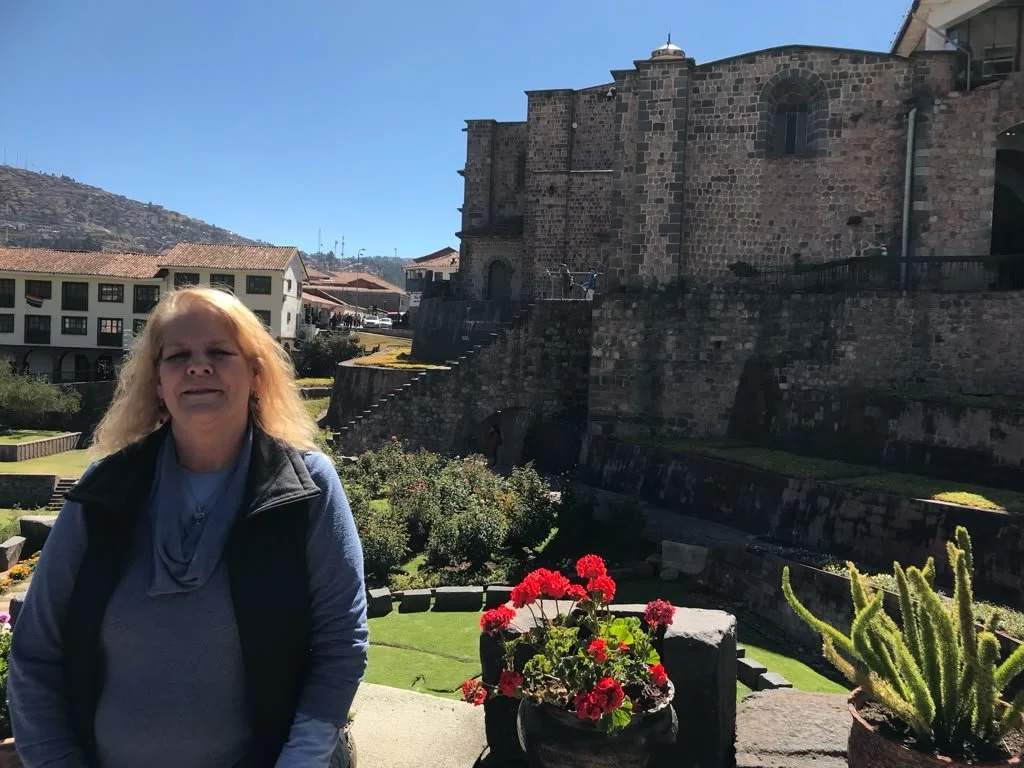
Mona sits in reverence with Inti at the Qorikancha temple site in Cusco, Peru
Haylli Cuzco!!!
In Service to our Pachakuti Mesa Tradition ~ I Embrace you in Munay 🙏🏽
Storytelling by Mona Rain, don Oscar Miro-Quesada’s Sanctioned Teacher, for June Solstice 2026
“Walk softly upon Pachamama, and Be Her Prayer”